

Дар настоящего
07 июл., 2026


2025 @ Христиане.
Не кради

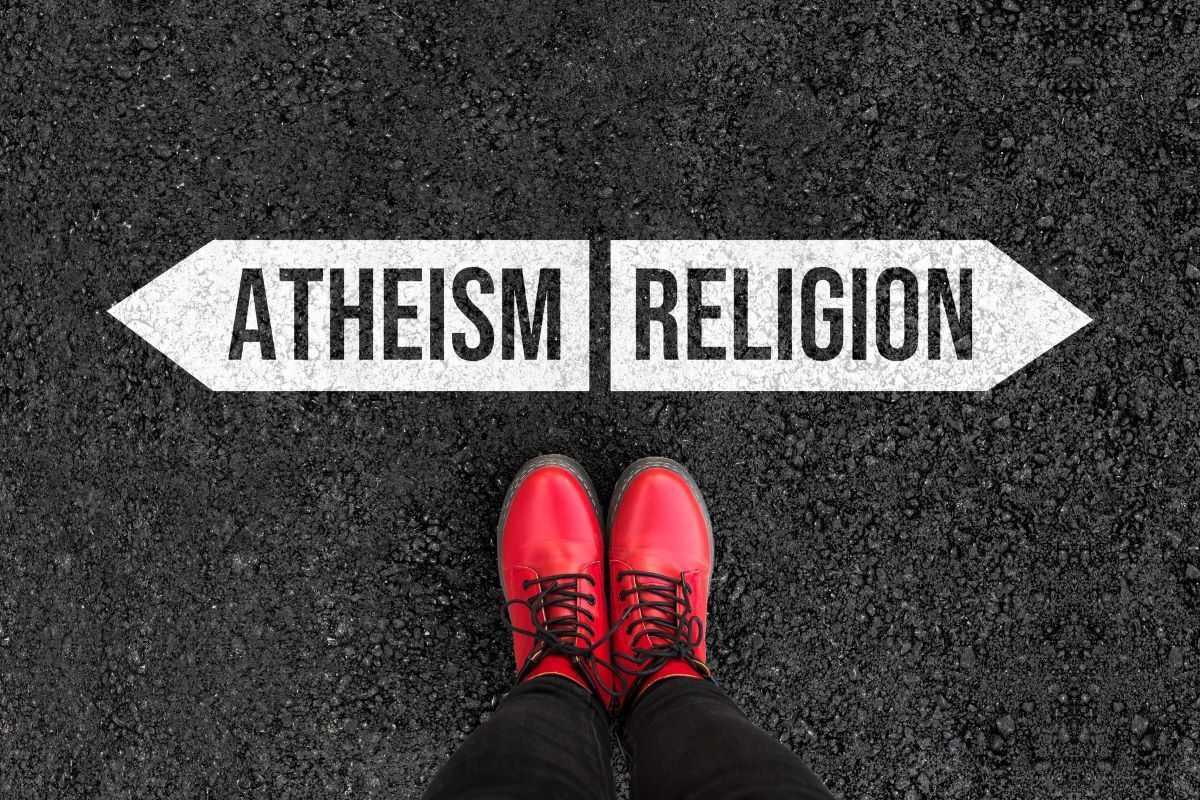
Почти два десятилетия история веры в Америке казалась решённой: посещаемость церквей падала, религиозная принадлежность сокращалась, а молодые люди уходили из церквей своего детства. Однако последние данные показывают, что снижение замедлилось, и на смену ему приходит «любопытный скептицизм».
For nearly two decades, the story of faith in America seemed settled: church attendance was sliding, religious affiliation was shrinking and young adults were walking away from the churches that shaped their childhoods. The rise of the “nones” became one of the defining religious stories of the century, shorthand for a generation that hadn’t necessarily rejected God as much as lost confidence in the institutions claiming to speak for Him.
Lately, though, the storyline has become harder to summarize with a clean downward arrow.
Pew Research Center found that the long decline of Christianity in the U.S. appears to have slowed and may have leveled off, with Christians making up 62 percent of American adults in its 2023-24 Religious Landscape Study and the religiously unaffiliated holding steady at 29 percent. Bible sales rose 22 percent in the U.S. through October 2024, according to Circana BookScan data reported by The Wall Street Journal. Newer congregational research from the Hartford Institute found median in-person worship attendance has climbed from its pandemic low of 45 adults to 70, still far below the 137 reported in 2000 but no longer collapsing in the way many leaders feared.
The obvious temptation is to declare the deconstruction era over and start sketching the revival merch. Glenn Packiam, lead pastor of Rockharbor Church in Costa Mesa, California, and a senior fellow at Barna Group, thinks the reality is more interesting than that.
“I think we’ve moved on to something else,” Packiam said.
He calls the current moment “curious skepticism,” a phrase that captures the strange mix taking shape across American religious life. People are more open to spiritual questions than they were a few years ago, but many remain wary of churches, pastors and the religious systems that formed their earliest assumptions about God.
“There’s a rise in spiritual curiosity, but there is still a high degree of skepticism about religious institutions,” Packiam said.
Packiam sees the last 25 years of American faith as a series of shifting cultural moods. After 9/11, the loudest voices in the room often belonged to the new atheists, writers like Richard Dawkins and Christopher Hitchens, who argued that religion wasn’t merely false but dangerous. In that era, public suspicion often fell on religious devotion itself, as though conviction inevitably slid into fanaticism.
By the late 2000s and early 2010s, that posture had cooled into what Packiam describes as indifferent agnosticism. The mood became less combative and more detached, the spiritual equivalent of a shrug: maybe faith works for you, maybe it doesn’t, but it certainly isn’t worth rearranging a life around.
The pandemic disrupted that detachment. Isolation, institutional failure and a public crisis of meaning reopened questions many people had managed to avoid. Barna’s 2025 State of the Church research found rising commitment to Jesus over the previous several years, especially among younger adults, even as organized religion remained under scrutiny.
For Packiam, that tension matters. A person can be drawn toward Jesus while carrying deep suspicion toward the church. A person can miss the language of grace while flinching at memories of how religious communities handled power or pain. A person can walk back into a sanctuary without knowing whether they’re returning home or simply admitting that life outside faith didn’t become as coherent as advertised.
Packiam has seen that last category up close.
“There are folks that are in their early thirties, they’re getting into their careers and they’re like, ‘I walked away from all of it, didn’t believe it, got disillusioned, but I didn’t find anything better,’” Packiam said.
For some, the replacement was political ideology. For others, it was a different community of meaning that promised belonging but delivered its own rules about purity and exile. Packiam’s diagnosis is sharp because it doesn’t romanticize the church or pretend the world outside it lacks moral seriousness. His point is that every system has a version of sin. Fewer have a convincing account of what happens after someone fails.
“Cancel culture has a version of sin,” Packiam said. “You have violated, therefore you are shunned.”
The question that follows is harder: Where is the path back?
Christianity’s answer, at its best, has always been grace, forgiveness and reconciliation. Packiam believes that promise still has power for people who left the church, tried to build a life elsewhere and found that the alternatives often came with their own doctrines but less mercy.
Some of this may simply be the normal turbulence of adulthood. Packiam noted that the twenties have long been a liminal stage, a threshold season when people experiment with beliefs and forms of belonging before later searching for stability. Faith often re-enters the picture when life becomes less theoretical and more demanding.
The twist is that many of the old stabilizing markers are arriving later. Marriage is delayed. Careers feel less linear. Adulthood itself can seem permanently provisional. If people are returning to faith before those traditional anchors are fully in place, Packiam wonders whether something deeper may be happening.
“Maybe it is just a longing for something that has been lost,” he said.
One of the more surprising signs of that longing, Packiam said, is the number of public intellectuals who have begun taking Christianity seriously. Some aren’t starting with belief in the resurrection or a dramatic conversion story. They’re beginning with the sociological question: What kind of life does Christianity produce?
Packiam pointed to British writer Louise Perry, whose critique of the sexual revolution led her toward a public reconsideration of Christianity. Her path, as Packiam reads it, reflects a broader shift in how some modern people approach faith. Previous generations often moved from belief to belonging. Increasingly, people seem to be asking whether Christianity creates a livable moral world before deciding whether its supernatural claims are true.
“From the sociological claims to the supernatural claims is an interesting map,” Packiam said.
For churches, that map requires a different kind of confidence. Packiam doesn’t think pastors should answer modern skepticism with brittle certainty or cartoon versions of “what the world says.” He argues for sermons that treat a monologue like a dialogue, openly naming the strongest objections to Christian belief and answering them with humility rather than defensiveness.
He also believes churches should be willing to show how Christian wisdom resonates with what researchers keep discovering about human flourishing. The Bible remains primary, he said, but God’s wisdom also shows up in the world He made. When studies reveal that committed community strengthens well-being or that living for the good of others correlates with deeper happiness, Christians don’t need to act surprised.
Packiam is equally clear that churches shouldn’t reduce Christianity to social usefulness. In a culture already fascinated by spirituality, energy, healing and transcendence, Christians gain little by pretending their faith is merely a set of ethical habits with better music.
“Our radical claim is that the God of the universe is actually in the room through the Holy Spirit,” he said. “I don’t think we should shy away from that claim.”
Packiam is cautious, though, about using this moment as a victory lap over deconstruction. He doesn’t know that the data can prove former deconstructionists are returning in large numbers, and he’s not sure broadcasting that conclusion would help the people still in the middle of painful questions.
Sometimes, he said, deconstruction is a necessary purification of faith. People may need to scrape away cultural assumptions or inherited rules that were presented as Christianity but were never the Gospel itself. In his recent book, What’s a Christian, Anyway?, Packiam points readers back to the Nicene Creed as a way of identifying the core of Christian belief before anything else gets added onto it.
“Sometimes what people call deconstruction is a necessary purification of their faith,” Packiam said.
So maybe the better story is this: The long decline of American religion may have slowed, but the next chapter won’t look like a simple return to the church culture many people left behind. The people asking spiritual questions now have lived through institutional disappointment. They know how religious language can be used badly. Many are interested in Jesus while remaining unconvinced that Christians have learned from the last decade.
Curiosity is rising, but trust will have to be earned.
Recommended for you
Поймали мужа на порнографии? Отреагируйте правильно.
Десять признаков духовного насилия
Могут ли мужчина и женщина быть лучшими друзьями?
Восемь способов борьбы с пристрастием к порнографии
Сорок последствий прелюбодеяния